
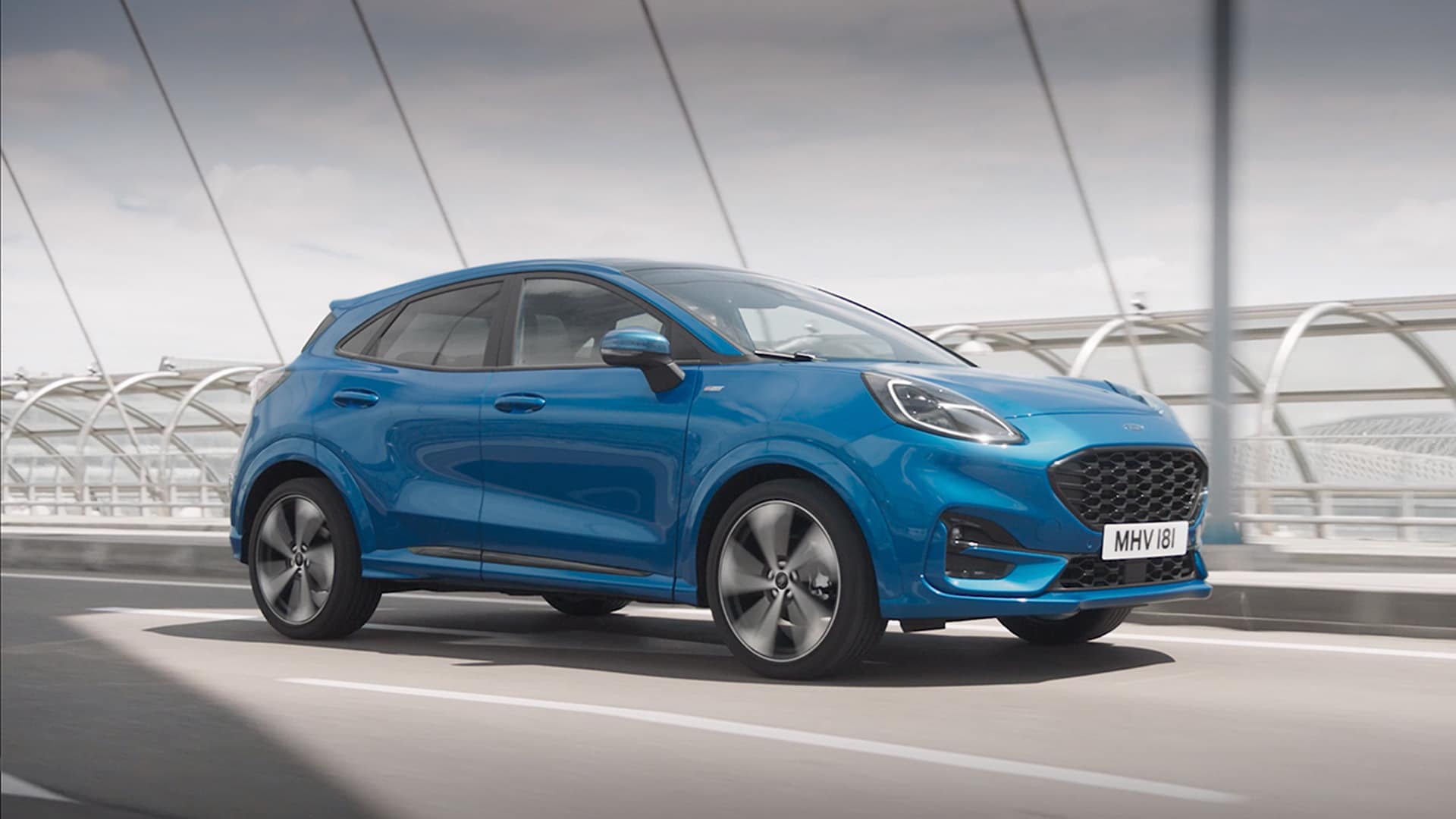
Ford Puma Review
The Ford Puma name might be familiar to you. The original vehicle with the name was a late nineties small coupé. The new Puma is a compact SUV but retains its predecessor's sporty look and fun driving experience.
If you’re looking for a new car to drive, leasing a Ford Pumais an excellent choice. This small SUV combines practicality, style, and driving dynamics. It’s fun to drive and has exterior design features that set it apart from rivals such as the Nissan Juke, Skoda Kamiq, VW Taigo, and VW T-Roc.
The Puma also has an efficient mild-hybrid powertrain. The efficiency of the model’s engine helps reduce fuel consumption and emissions.
Before you lease a car from the Ford Puma range, you want to know what to expect from the vehicle. Keep reading our Ford Puma review to discover details about aspects of this car, including design, tech, running costs, safety, and reliability. This information will allow you to decide whether the Ford Puma is the right car lease option for you.
Ford Puma overview
You can see an overview of Ford Puma specs in the table below. We’ll take a deeper dig into the details throughout the rest of this article.
RRP across the range (OTR)
£25, 915 - £31,760
Available trim choices
6
Engine options
2
Fuel types available
Petrol
Doors
5
MPG across the range
42 - 52
Body colour choices
Blazer Blue, Desert Island Blue, Solar Silver, Frozen White, Fantastic Red, Magnetic, Grey Matter, Agate Black
The Ford Puma – your questions answered
We know that you need the right information to make the best car leasing decision for you. So, we compiled some of the most asked questions about the Ford Puma and provided the answers for you.
Is Ford Puma worth buying?
The Ford Puma generally gets a positive reaction to its stylish design, practical driving experience, and engine efficiency. The drive can be a little bumpy until you reach a higher speed. But, overall, it’s worth investing in this car. If you like the sound of this car but don’t want the expense of purchasing it, leasing a Ford Puma is a more affordable option.
What is a Ford Puma equivalent to?
The handling of the Ford Puma is like that of its stablemate, the Ford Fiesta. In terms of vehicles that are similar overall, compact SUVs in the Nissan Juke range are the closest.
Is Ford Puma good on a motorway?
The Puma is a good motorway driving choice for most people. Its handling is predictable and stable. This means that you should be able to drive significant distances on a motorway comfortably and stress-free.
Are Ford Puma engines reliable?
The engine of a Ford Puma has an above-average rating. You get an impressive amount of torque from a tiny 1.0-litre engine. Even when the vehicle is well-loaded, it has a good turn of pace. One of the main reasons for the good reliability and performance of the engine is the EcoBoost system. The engine is modified with 48-volt mild hybrid technology. A battery-fed starter acts as a motor and provides extra torque in the drivetrain.
Are Ford Pumas good on fuel?
The tiny 1.0-litre engine and mild hybrid technology of the Ford Puma make it an affordable drive. The official fuel efficiency figures across the range are 42-52 mph.
Ford Puma design, technology, and running costs
Below is our review of the performance and driving experience associated with the Ford Puma. The information and insights will help you make informed decisions about buying or leasing a Ford Puma.
Performance and driving experience
All Ford Puma engines are 1.0-litre petrol with 48-volt mild-hybrid (mHEV) technology. This means that the engine can shut off when you’re coming to a stop to save fuel. The acceleration from the engine is better than that for Juke or the T-Roc 1.0 TSI, at 0-60mph in 9.6 seconds.
The Puma is a nimble car that deals easily with bends, especially with the sports suspension of the ST-Line version. When driving around city streets, you’ll appreciate that the steering has a good sense of connection.
Running costs
The initial cost you’ll encounter if you buy a Ford Puma is the purchase price. The table below shows you the on-the-road (OTR) cost of the various Puma options.
Trim
Engine
Cost (OTR) (from)
Titanium
1.0L Ford EcoBoost Hybrid (mHEV) 125PS 6-speed manual
£25,915
ST-Line
1.0L Ford EcoBoost Hybrid (mHEV) 125PS 6-speed manual
£26,865
ST-Line X
1.0L Ford EcoBoost Hybrid (mHEV) 125PS 6-speed manual
£27,965
Vivid Ruby Edition
1.0L Ford EcoBoost Hybrid (mHEV) 125PS 6-speed manual
£30,490
ST-Line Vignale
1.0L Ford EcoBoost Hybrid (mHEV) 125PS 6-speed manual
£29,340
ST
1.0L Ford EcoBoost Hybrid (mHEV) 170PS 7-speed automatic
£31,760
If these purchase costs are unaffordable, leasing a car from the Puma range, such as the Ford Puma Hatchback 1.0 EcoBoost Hybrid mHEV ST-Line 5dr is an excellent cost-effective alternative.
In addition to the cost of purchasing or leasing a Ford Puma, there are other running costs to consider. For example, maintenance and servicing is an essential expense. You can expect to pay from around £141 for an interim service and from around £226 for a full service.
Fuel is another expense to factor into the Ford Puma's running costs. We’ve provided fuel efficiency and emissions data below to give you some insight into these costs.
Economy
CO2 emissions
Petrol
42 - 52 mpg
122g/km – 144g/km
Interior and tech
Unlike the exterior, the interior of the Ford Puma isn’t especially inspiring. It’s a bit dull due to the darker shades of cloth and plastics used. Competitor vehicles like the Renault Captur and the Peugeot 2008 are more expressive and aesthetically pleasing.
However, there are several more positive aspects of the Puma’s interior, Including,
A comfortable driver’s seat with lumbar support.
Excellent side driver’s seat support in the ST-line versions.
Easy-to-use dashboard with intuitive air-conditioning controls.
An 8.0-inch touchscreen infotainment system with DAB radio, built-in sat nav, Bluetooth, Android Auto, and Apple CarPlay.
A seven-speaker sound system that’s upgraded to a 10-speaker B&O setup in the ST-Line X or ST-Line Vignale trims.
Space and comfort
The front of the Ford Puma has plenty of space unless the driver or front-seat passenger is exceptionally tall. There’s also more than enough storage. The door bins are a good size, and there are storage spaces below the front armrest and in front of the gear lever. You’ll also find a couple of handy cupholders to use.
The back of the Puma is less roomy. Taller passengers don’t have a lot of legroom, and the headroom is less than in rivals like the Kamiq or T-Roc. That being said, the space is still adequate for most people. A quick tip is to avoid the optional panoramic sunroof, which further reduces headroom.
Boot space in the Ford Puma is more than adequate for most families. There’s enough room for six carry-on-size bags, and if you lift the boot floor, there’s a well with enough room for two more.
The suspension of the Puma is on the firm side, which means you may feel a few bumps along the way. If you’re looking for a smoother ride, the Titanium trim is a good option, as it’s the only trim that doesn’t have the really firm sport suspension.
It’s important to add that even the firmer suspension doesn’t make the ride in a Puma extremely uncomfortable. You also get good body control from the Puma’s suspension, which means you get less bouncing and rocking about on undulating roads.
Safety features and reliability
The Ford Puma has good safety features from the base trim, including automatic emergency braking, lane departure warning, adaptive cruise control, blind spot monitoring, and rear parking sensors. You also get front parking sensors if you choose the highest ST-Line Vignale trim.
In terms of safety, the main issue with the Puma is visibility. The front pillars can obstruct the view at junctions and roundabouts, depending on the driver’s position. In the back, the rear pillars and a rising window line reduce visibility.
Ford Puma pros and cons
To understand whether buying or leasing a Ford Puma is right for you, you need honest advice about the positive and less positive aspects of the vehicle. To help you, we’ve listed the pros and cons of the Ford Puma below.
Pros
Cons
Stylish exterior design that catches the eye
Rear visibility could be better
Responsive handling that makes for a fun drive
The ride is on the firm side
Good cargo space for a compact SUV
The onboard tech is good but not outstanding
The rear of the vehicle may be claustrophobic for some
Offroad capability is limited
The verdict
The Ford Puma has driving and design appeal. Its nippy acceleration, striking exterior, and agile handling make it a popular choice with people looking for a compact SUV. It’s also a sensible choice of vehicle due to its low CO2 emissions and impressive fuel economy.
The Puma’s interior doesn’t inspire as much as the exterior. However, there’s more than enough tech to keep most people happy, and the driver’s seat provides good comfort. Visibility isn’t as good as it might be, but your safety is protected with a range of features.
Overall, the Ford Puma is a good choice of compact SUV to lease. It’s a fun, safe, and cost-effective ride. If you’re considering leasing a Ford Puma, look at our latest offers and in-stock lease deals to get the best value from your budget. You can also contact us for more information and advice about your leasing options.