
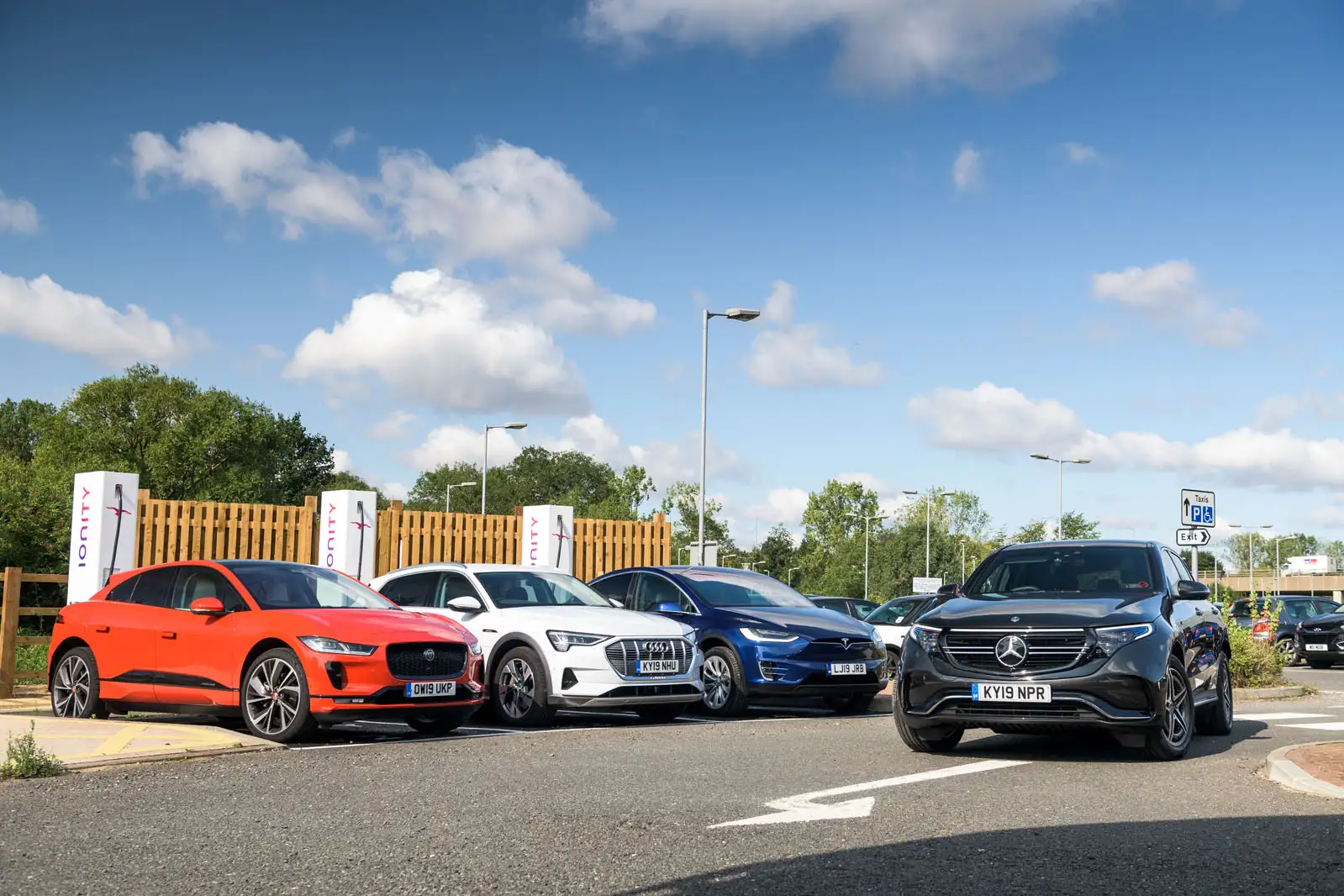
There’s no doubt that the popularity of electric vehicles (EVs) is on the increase in the UK. According to a UK Government report issued in May 2022, 327,000 EVs were registered in 2021; a 77% increase on the previous year. For many people, an interest in EV lease or purchase is about reducing their impact on the environment and preparing for the government’s plan to ban the sale of petrol and diesel cars by 2040.
There is also a cost aspect with suggestions that electric cars are cheaper to run. So, is running an EV cheaper than petrol? Or are electric cars too expensive to run? To help answer these questions, we’ve analysed running costs for an electric car in the three main areas of expense and compared these with diesel and petrol vehicle running costs. We've also included our best electric car lease deals and detailed the running costs.
Car running costs Electric vs Petrol vs Diesel
The main running costs of a car include charging or fuel, maintenance, and insurance. To ascertain the relative expense of running an electric car compared with its electric and diesel counterparts, we took a deeper look at each area of expenditure and price.
Is it cheaper to run an electric car UK?
This is a wide question when you consider the array of EV makes available in the UK. To make it easier to see and understand cost comparisons, we looked at electric, petrol, and diesel cars in the BMW i4 and BMW 4 Series that feature in our leasing catalogue.
Electric vs Petrol vs Diesel quick reference
A look at the quick reference tables below, shows that running costs for EVs are lower than petrol and diesel alternatives in terms of fuel/charging and maintenance. Whereas insurance costs are higher for electric cars.
Charging/Fuel/Electricity Cost
Electric
Petrol
Diesel
Average overall cost
£22.78 (empty to full charge) *
£84.63 (empty to full tank)
£85.67 (empty to full tank)
Average cost per mile
8.59p**
12.91p***
13.08p***
*Assuming 34p/kWh.
** Based on average range of 265 miles as per EV Database.
***Based on latest fuel rates from Confused.com
Insurance
Electric
Petrol
Diesel
Insurance Group
35*
30*
32*
*Based on information from Gocompare.com
Maintenance
Electric
Petrol
Diesel
Service costs
£460
£836
£1,186
*Based on the cost of the official BMW Service Inclusive
These costs are your main concerns if you’re leasing an electric car. If you buy an EV instead, you need to factor in depreciation costs and car tax bands.
Our overview is only part of the story. To give you more insight into electric car running costs compared to petrol and diesel, we’re looking more closely at each expense.
How much does it cost to charge an electric car?
The cost of charging an electric car in the UK varies depending on whether you use home, work, or public charging.
Looking first at public and work charging, you’ll sometimes find this is free. For example, is it free to charge an electric car at a supermarket? The answer to this is that it can be. According to zap-map.com Sainsbury’s, Lidl and Aldi all have free charging points but other providers, like Morrisons and Waitrose charge for use.
This isn’t unusual. It’s common for charging costs to exist. On average, you can expect to pay between £1.50 and £3 per hour in addition to 17 per kWh of electric.
Charging at home is usually the most convenient option and grants to install a home charging point are available in some circumstances. The cost of charging an EV at home varies depending on the cost of your home electricity supply.
However, you can use the Zapmap home charging calculator to estimate the cost of charging your car. Using our example of the BMW i4, the figures are in the table below:
Charging time
27.9 hours
kWh added
84
Miles added
328
Cost
£29
Looking at the average cost of charging an electric car, helps you get an understanding of the cost of your driving over a set distance. It’s important to remember that this is an estimation as actual costs depend on factors such as driving conditions, battery and the environment.
We’ve used the average charging cost per mile of 8.59p that we calculated for the BMW i4 to answer the question how much does it cost to drive 100 miles in an electric car UK? We’ve also compared this cost with the fuel expense of driving a petrol or diesel car over 100 miles, using the average petrol cost of 12.91 and the average diesel cost of 13.08 for the BMW 4 series.
The results are in the table below.
Electric
Petrol
Diesel
100 miles (average cost)
£85.90
£129
£130.80
How much can I save on fuel costs by using an electric car?
Taking the figures in the table above, we calculated estimated annual charging/fuel savings if you lease or buy an electric car.
According to UK Government figures, the average annual mileage for a vehicle in 2021 was 5,300. A simple calculation of AM/100 x Average cost per 100 miles, gives the following annual costs.
· Electric - £4,552.70
· Petrol - £6,837
· Diesel - £6,932
These figures relate to our BMW i4 and BMW4 series examples, but similar percentage savings apply to other electric cars.
Charging/Fuel – Electric, Petrol or Diesel?
Electric Wins
What are the ongoing maintenance costs for an electric car?
Charging an electric car is only part of the story, you also have to maintain the vehicle. So, how much does it cost to maintain an electric car?
In simple terms, an EV doesn’t have as many moving parts as a petrol or diesel vehicle. This means that maintenance costs for electric cars are lower, although your vehicle still needs to be safe and meet MOT requirements, so servicing costs are a factor.
How much does it cost to service an electric car?
In terms of using BMW as an example, the company provides BMW Service Inclusive. You make one upfront payment and your vehicle’s servicing requirements are met for at least the first four years after registration. The cost of BMW Service Inclusive is as follows:
· Electric vehicles - £460
· Petrol vehicles - £836
· Diesel vehicles - £1,186
This is just an example but it’s a good indicator that maintenance costs for electric cars can be half as much as petrol and diesel alternatives.
How much are tyres for an electric car?
You can’t get away from the fact that tyres need replacing, and this can be a significant cost. So, how much does it cost to replace tyres on an EV?
According to data from EPYX, the average size of a tyre fitted to an electric vehicle is 18.59 inches and the average cost is £207. Compare that to an average size of 17.40 and cost of £130 for tyres fitted to cars with combustion engines.
The reason for the higher cost of EV tyres is their bigger size and specialist nature. You can save money by fitting regular tyres on an electric car. However, doing this can adversely affect braking, wear, and noise levels. Plus, even with higher tyre costs, you’ll still save money on maintenance with an electric vehicle.
When replacing tyres on an electric car, the most important thing is to ensure the tyres are appropriate to the size and model of your vehicle. They also need to have the appropriate weight and pressure.
Maintenance – Electric, Petrol or Diesel?
Electric Wins
What is the cost of insuring an electric car?
Insurance is essential if you’re leasing or buying an electric car. The cost of this insurance depends on a number of factors such as:
· Make and model of the vehicle
· Age of the driver
· Driving history of the driver
· Area in which the driver lives
Given the various factors involved in determining insurance premiums, we can’t definitively answer the question “How much does it cost to insure an electric car?” However, we can discuss insurance groups.
These groups are numbered 1-50 with group one having the lowest premiums and group 50 the highest (in general terms when it comes to the power and cost of the car). Electric cars are usually in higher numbered insurance groups than their petrol and diesel counterparts.
Using our earlier example of the BMW i4 and the BMW 4 series, the insurance groups are as follows:
· Electric – 35
· Petrol – 30
· Diesel – 32
When you look at the insurance group number, it has a letter with it. These letters indicate whether the vehicle fully meets, doesn’t meet, or exceeds the requirements of the standard set. You can see the full list of these letters and what they stand for below.
Letter
Meaning
A
The car adheres to the standards of its group
D
The car doesn’t meet the standards of its group so has been placed in a higher group
E
The car exceeds the standards of its group and has therefore been placed in a lower group
P
Data for the vehicle isn’t complete because the system wasn’t in place when the car was launched
U
The security of the car is well below the required standards and the driver may be asked to improve this security
G
The car is imported and is part of the grey imports or parallel imports group
In terms of our BMW examples, petrol vehicles are the cheapest to insure. In other comparisons, diesel will come out on top for affordability. Electric will normally be the most expensive choice. You can use the Compare the Market calculator for more information about insuring a particular vehicle.
Insurance – Electric, Petrol, or Diesel?
Petrol Wins
Will an electric car save me money UK?
Having looked at the overall running costs of an electric car when compared with petrol and diesel vehicles, the costs are less overall. The cost of charging an electric vehicle is cheaper than fuel for petrol and diesel cars and electric cars cost less than petrol and diesel models to maintain. Insurance premiums are higher for electric cars, but this doesn’t stop you from saving money by choosing electric ahead of petrol and diesel.
If you want to find an electric car to lease, browse our leasing options and range of electric vehicles or contact us if you have any questions or would like to raise a query.